
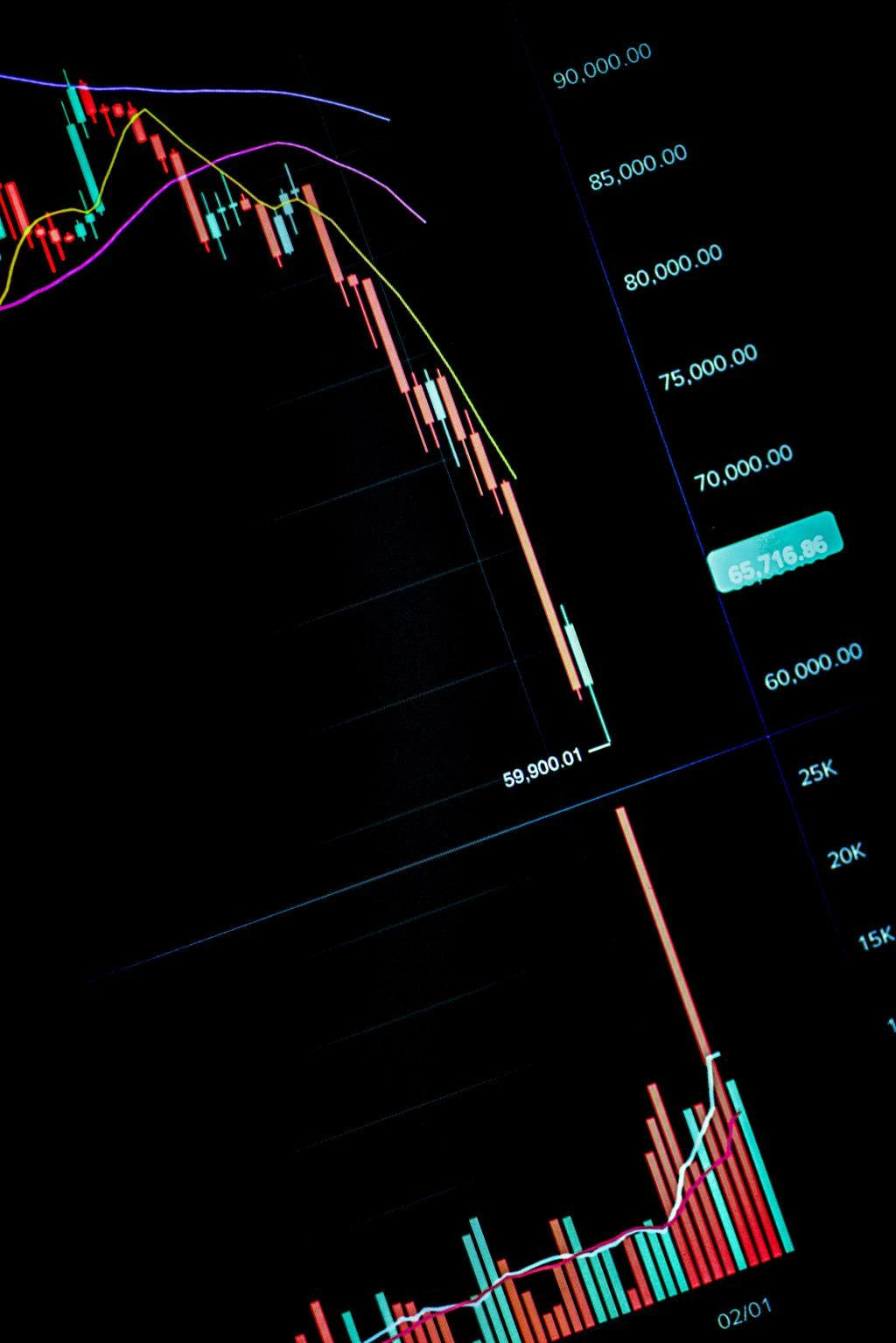
Crypto is crashing because several pressure points are acting at the same time: weaker liquidity, ETF outflows, cautious institutional positioning, macro uncertainty and declining retail momentum. Bitcoin is still the center of the market, so when Bitcoin loses structure, the wider crypto sector usually follows with sharper moves.
Practical verdict: this is not a simple “crypto is dead” moment, but it is also not a normal small pullback. For investors and traders, the main risk is mistaking a liquidity-driven decline for a quick discount opportunity. Before buying, selling or averaging down, the key checks are ETF flows, trading volume, Bitcoin’s support zones, dollar strength and whether altcoins are falling faster than Bitcoin.

The Real Reason Crypto Falls So Fast
Crypto markets move faster than traditional assets because liquidity is thinner and confidence changes quickly. When buyers are active, this creates strong upside momentum. When buyers step back, the same structure works in reverse. Price does not need a single disaster to fall sharply; it only needs fewer bids, more sellers and enough leverage to force liquidations.
Bitcoin’s 2026 correction fits that pattern. After reaching an all-time high above $126,000 in October 2025, Bitcoin later moved into a weaker range and was trading around the low $80,000 area in mid-May 2026. That means the market is not reacting to one isolated headline. It is repricing the previous bull phase, where expectations, ETF demand and speculative positioning had all become stretched.
The important point is sequence. First, momentum weakens. Then leveraged traders start cutting positions. Then liquidity becomes worse because buyers wait for lower prices. After that, every sell order has a larger effect. This is why a crypto decline can feel sudden even when the pressure has been building for weeks.
Bitcoin Sets the Direction for the Whole Market
Bitcoin still works as the main risk signal for crypto. When Bitcoin holds firm, capital often rotates into Ethereum, Solana, gaming tokens, AI tokens and smaller speculative assets. When Bitcoin breaks down, investors usually move in the opposite direction: they reduce altcoin exposure first and keep only the strongest positions.
That is why the question “why is crypto crashing” usually begins with Bitcoin. If Bitcoin cannot defend key price zones, altcoins rarely stay independent for long. Smaller assets have lower liquidity, wider spreads and more emotional holders. A 5% Bitcoin drop can easily become a 10-20% move in weaker altcoins.
This correlation is not perfect, but it is powerful during stress. In a bull phase, traders look for stories: new chains, new ecosystems, new memes, new gaming launches. In a correction, they look for exits. The market becomes less interested in narratives and more focused on cash, stablecoins and lower-risk assets.
ETF Outflows Removed a Key Support Layer
Spot Bitcoin ETFs became one of the strongest engines of the previous crypto rally. They allowed traditional investors to buy Bitcoin exposure through familiar brokerage channels, and steady inflows created a visible source of demand. When that flow slows or reverses, the market loses one of its main support layers.

In early 2026, U.S. spot Bitcoin ETFs saw notable outflows during the correction phase, with reports in February pointing to billions of dollars leaving these products while Bitcoin moved toward lower price ranges. Later in May 2026, market commentary again focused on ETF outflows as Bitcoin struggled near resistance around the low $80,000 area.
ETF selling matters because it is mechanical. When investors redeem ETF shares, the fund structure can lead to Bitcoin exposure being reduced. That adds supply pressure or at least removes expected demand. In a deep, liquid market, this can be absorbed. In a nervous market, it becomes a signal that larger investors are no longer aggressively supporting the price.
Why Institutional Behavior Changes Sentiment
Retail traders often follow price. Institutions often follow risk models, liquidity conditions and portfolio allocation rules. If volatility rises, the U.S. dollar strengthens, interest-rate expectations shift or equities become unstable, institutions may reduce exposure even if they still believe in Bitcoin long term.
That creates a difficult environment for crypto. Positive narratives remain, but capital becomes selective. A fund can like Bitcoin’s long-term thesis and still reduce short-term exposure because drawdown risk has increased. Markets move on flows, not just beliefs.
Liquidity Is the Hidden Engine Behind the Crash
Liquidity decides how easily the market can absorb buying and selling. A highly liquid market can handle large orders without extreme price movement. A thin market reacts sharply because there are fewer buyers waiting at each level.
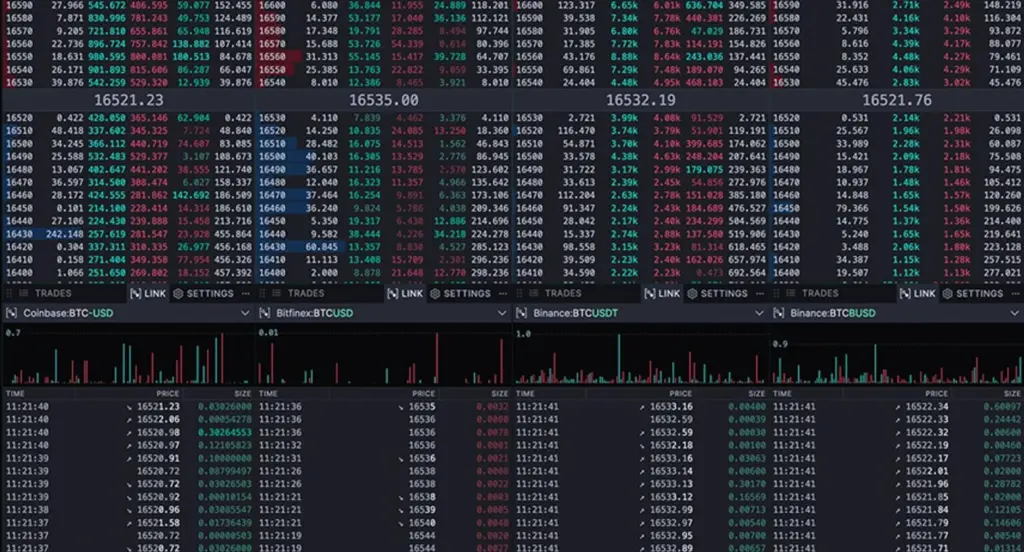
During a correction, liquidity usually falls for three reasons. Traders become cautious. Market makers widen spreads. Retail participants stop chasing dips. The visible result is price instability: candles get larger, recoveries fail faster, and small waves of selling push the market further than expected.
This is where the feedback loop begins:
- Bitcoin drops below a watched level.
- Leveraged positions get liquidated or closed.
- Traders move into stablecoins.
- Order books become thinner.
- The next sell-off moves price even more.
Nothing in that loop requires a new scandal. It is a market-structure problem. Once liquidity weakens, price becomes more sensitive to every piece of news, every ETF flow update and every macro headline.
Macro Pressure Makes Crypto Less Attractive
Crypto is often described as independent from traditional finance, but in practice it trades like a high-risk asset during periods of stress. When investors feel confident, they buy growth stocks, crypto, private-market exposure and speculative themes. When uncertainty rises, they prefer cash, Treasury products, defensive equities or gold.
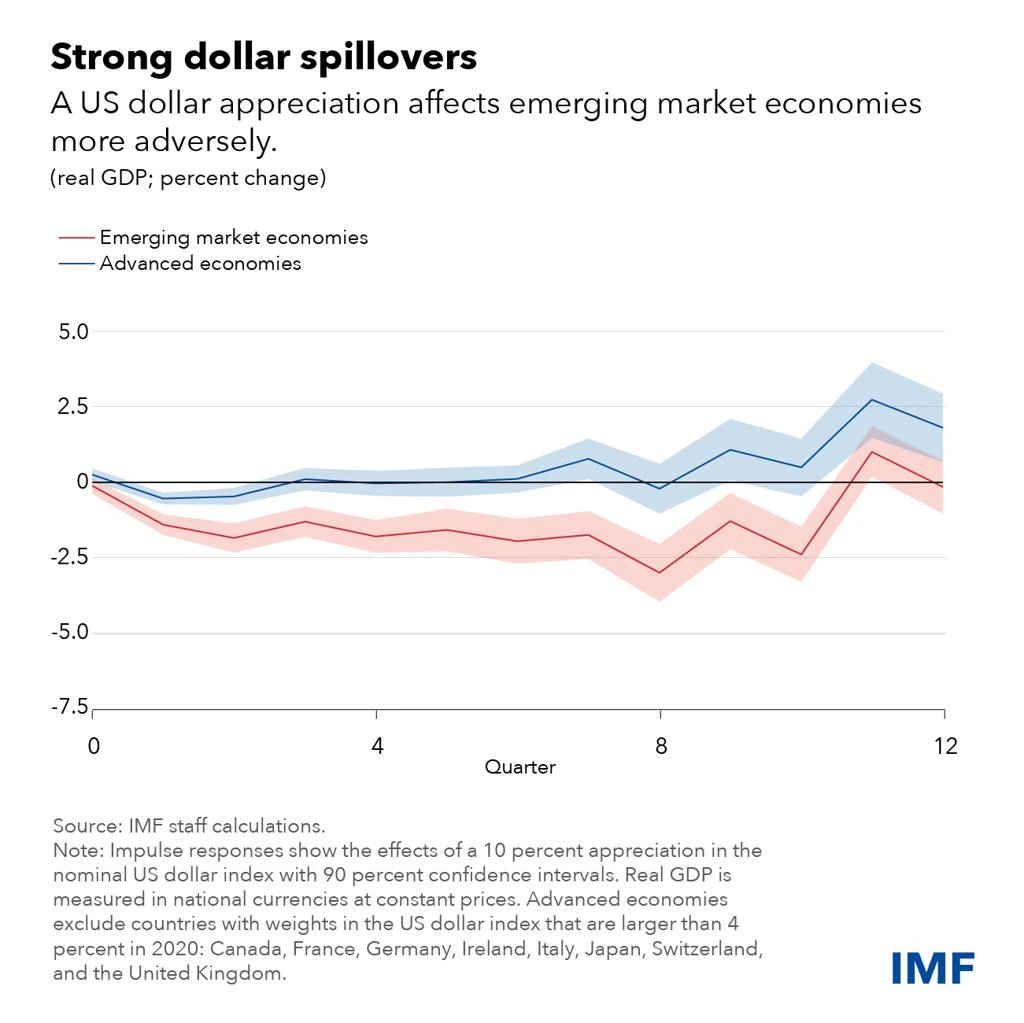
Interest-rate expectations matter here. If investors believe rates will stay higher for longer, speculative assets lose some appeal because safer yield becomes more competitive. A strong U.S. dollar can also pressure crypto by tightening global liquidity and making risk assets less attractive.
This does not mean Bitcoin has no long-term case. It means short-term capital allocation can override the long-term story. A trader may believe in Bitcoin as digital scarcity and still sell during a macro squeeze because portfolio risk has to be reduced.
Commodity moves can also affect sentiment. When gold attracts defensive capital, some investors treat Bitcoin as a riskier alternative rather than a pure safe haven. In that environment, Bitcoin may not receive the same protection as traditional defensive assets.
Regulation Adds Clarity and Uncertainty at the Same Time
Crypto regulation can be positive in the long run because it creates clearer rules for exchanges, stablecoins, custody and institutional participation. But during transition periods, regulation can also create uncertainty. Investors may wait to see which businesses benefit, which products face restrictions and how enforcement changes.
In May 2026, U.S. crypto-market attention included discussion around legislative efforts such as the Clarity Act, with Bitcoin trading around the $80,000 area while investors watched Washington for regulatory direction. That kind of policy focus can support long-term institutional interest, but it does not automatically solve short-term liquidity weakness.
The market separates narrative from flow. A pro-crypto headline can lift sentiment for a few sessions. Sustained recovery needs actual demand: ETF inflows, spot buying, stronger volume and reduced selling pressure.
Why Altcoins Usually Suffer More Than Bitcoin
Altcoins crash harder because they depend on confidence more than Bitcoin does. Bitcoin has the strongest brand, deepest liquidity and widest institutional access. Many altcoins rely on ecosystem growth, user activity, token incentives or speculative demand. When liquidity leaves the market, those weaker layers get exposed.
A project may still be technically active, but its token can decline if buyers disappear. This is especially common in sectors where valuation was built on future expectations: gaming tokens, AI tokens, layer-2 ecosystems, meme coins and early-stage DeFi assets.
The practical rule is simple. In a downturn, Bitcoin asks, “How much risk can the market still hold?” Altcoins ask, “How much extra risk does the market still want?” When the answer is “not much,” capital moves back toward Bitcoin, stablecoins or out of crypto entirely.
Is This a Crypto Winter or a Correction?
A correction becomes a crypto winter when weak prices combine with falling activity, lower funding, fewer launches, reduced retail interest and long periods of failed rallies. A sharp Bitcoin drawdown alone is not enough. The duration and participation trend matter.
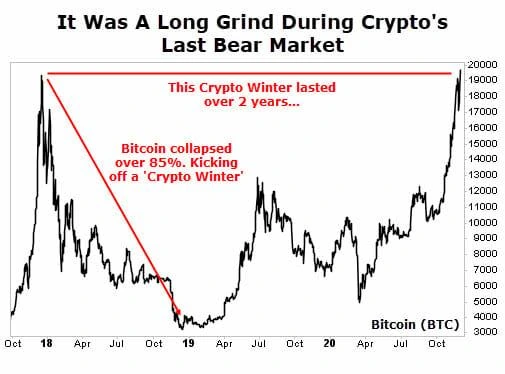
The current 2026 decline has several winter-like features: lower confidence, ETF pressure, weaker liquidity and broad altcoin stress. But recovery remains possible if liquidity returns and Bitcoin stabilizes above important support zones. Markets do not need perfect news to recover. They need selling pressure to slow and buyers to regain confidence.
A better question than “is this over?” is “what would prove conditions are improving?” The early signs are usually visible before the headlines turn optimistic: ETF outflows slow, spot volume improves, volatility becomes less violent, Bitcoin holds higher lows, and altcoins stop making deeper lows against Bitcoin.
What Investors Should Watch Next
The next phase depends on whether the decline remains controlled or turns into a deeper liquidity event. A controlled correction allows stronger assets to build bases. A liquidity event forces broad selling, including from holders who did not plan to exit.

The most useful indicators are not social media sentiment or influencer predictions. They are market signals that show whether real capital is returning:
- Bitcoin holding support after negative news;
- ETF flows shifting from outflows to steady inflows;
- daily spot volume increasing without extreme volatility;
- altcoins stabilizing against Bitcoin;
- stablecoin supply and exchange liquidity improving;
- macro pressure easing through rates, dollar movement or risk appetite.
No single signal is enough. A real recovery usually needs several of them to appear together. Until then, rallies can be sharp but fragile.
How to Think About the Crash Practically
The answer to why is crypto crashing is not one word. It is a chain: Bitcoin lost momentum, ETF flows weakened, liquidity thinned, macro pressure reduced risk appetite, and altcoins amplified the decline. Each factor made the next one stronger.

For long-term holders, the priority is position size and time horizon. For traders, it is liquidity, stops and avoiding leverage during unstable conditions. For new investors, patience is more valuable than trying to catch the exact bottom.
Crypto markets recover when capital returns, but recovery does not happen because prices have already fallen a lot. It happens when the market proves that buyers are strong enough to absorb supply again. Until that appears clearly, the safest interpretation is that the crash is a liquidity and confidence reset, not a simple buying signal.