

Ethereum vs Bitcoin is not a contest between two versions of the same asset. Bitcoin is designed primarily as a monetary network with predictable scarcity. Ethereum is a programmable settlement layer where applications, tokens and financial logic can run directly on-chain.
Practical verdict: Bitcoin fits users who want simpler crypto exposure, stronger scarcity narrative and a base-layer store-of-value thesis. Ethereum fits users who want exposure to smart contracts, DeFi, tokenized assets and application growth. The right comparison is not “which one is better,” but which network matches the role you expect it to play.
Core Purpose: Money Network vs Programmable Platform
Bitcoin’s design is intentionally narrow. It allows users to transfer value without banks, follow a transparent issuance schedule and hold an asset with a hard supply limit. That simplicity is part of the point. Bitcoin does not try to support complex applications on the base layer because every added function can increase technical and governance risk.
Ethereum was built with a broader goal. It allows code to run on-chain through smart contracts. That means a transaction can do more than move value from one address to another. It can interact with a decentralized exchange, mint a token, settle a loan, execute a game action or trigger a rule inside a financial protocol.
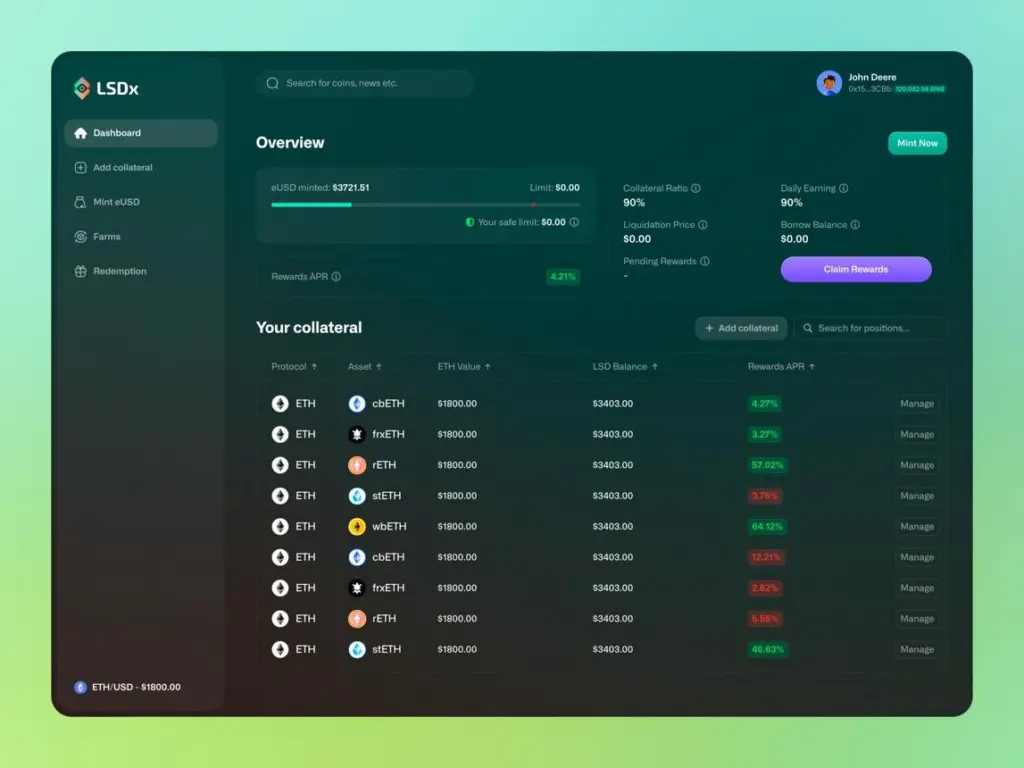
This difference shapes the user experience. Bitcoin asks: can a decentralized monetary system remain secure, scarce and resistant to change? Ethereum asks: can a decentralized network become a general execution layer for digital agreements and financial applications?
Supply Model: Fixed Scarcity vs Dynamic Issuance
Bitcoin’s supply model is one of its clearest features. The maximum supply is capped at 21 million BTC, and issuance is reduced through halving events roughly every four years. The 2024 halving cut the block reward to 3.125 BTC, continuing the long-term path toward lower new supply.
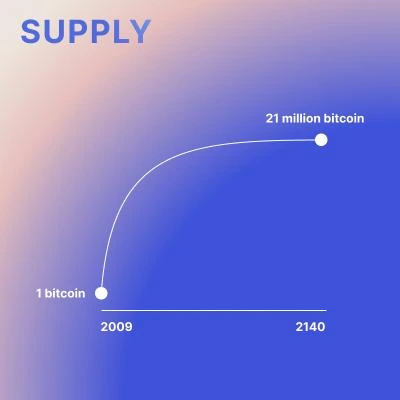
Ethereum does not use a fixed hard cap in the same way. Its monetary model is dynamic. ETH is issued to validators, while part of transaction fees can be burned through the fee mechanism introduced by EIP-1559. During periods of high network usage, burned fees can partially or fully offset new issuance. During quieter periods, supply may expand.
That creates two different narratives. Bitcoin’s supply story is time-based and scarcity-focused. Ethereum’s supply story is usage-sensitive: more activity can increase fee burn, while staking participation affects issuance. For investors, this means Bitcoin is easier to model as digital scarcity, while Ethereum requires attention to network demand, staking and transaction activity.
| Feature | Bitcoin | Ethereum |
| Main monetary idea | Fixed scarcity | Dynamic supply |
| Maximum supply | 21 million BTC | No fixed hard cap |
| Issuance change | Halving cycle | Validator rewards |
| Fee burn | No base-layer burn | Yes, through EIP-1559 |
| Main narrative | Digital gold | Programmable network asset |
Consensus: Proof of Work vs Proof of Stake
Bitcoin uses proof of work. Miners compete to add blocks by spending computing power and electricity. This makes attacks expensive because changing the chain would require enormous physical and economic resources. The trade-off is energy consumption and slower base-layer throughput.

Ethereum used proof of work before The Merge, then completed its move to proof of stake on September 15, 2022. Under proof of stake, validators lock ETH and participate in block production and finality. Ethereum’s official documentation says The Merge reduced the network’s energy consumption by about 99.95%.
The practical difference is not only environmental. Proof of work ties security to energy and mining hardware. Proof of stake ties security to staked capital, validator behavior and penalties for misconduct. Bitcoin supporters often value PoW because it connects security to external cost. Ethereum supporters often value PoS because it reduces energy use and makes future protocol development more flexible.
Transaction Speed, Fees and User Experience
Bitcoin’s base layer is built for security and settlement, not high-frequency interaction. Blocks are produced roughly every 10 minutes, and users often wait for multiple confirmations for larger transfers. This makes Bitcoin reliable for value transfer, but less suitable for frequent application-style actions on the base layer.
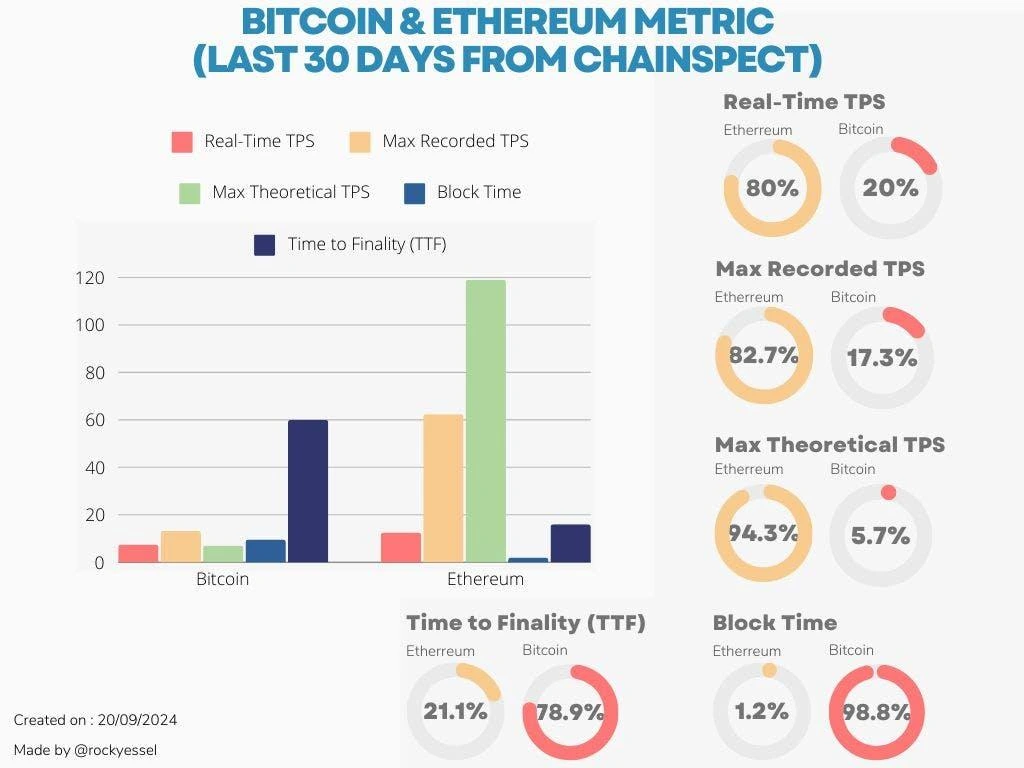
Ethereum produces blocks much faster and supports more complex transactions, but that complexity creates a different fee model. Ethereum users pay gas because transactions consume computation and storage resources. A simple ETH transfer uses less gas than a smart contract interaction. A DeFi trade, NFT mint or complex contract action can cost more because it asks the network to do more work.
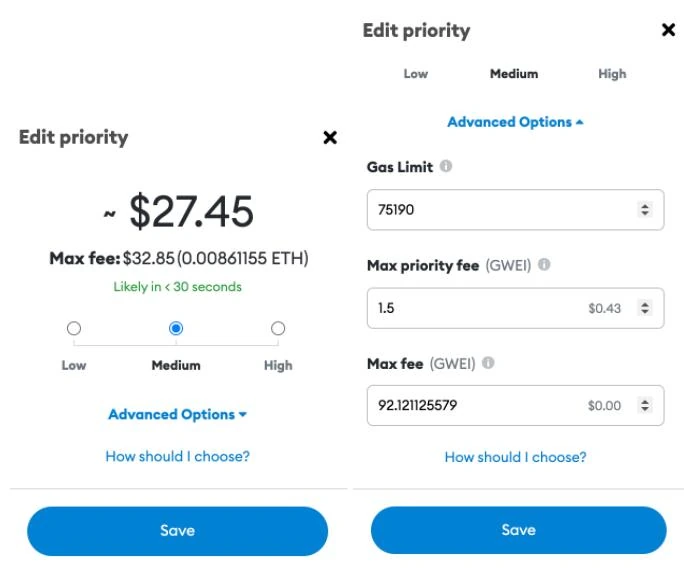
This is why Ethereum fees can feel unpredictable. Bitcoin fees mainly reflect demand for block space. Ethereum fees reflect both block-space demand and computation demand. For an investor holding ETH, fees may seem like a network revenue signal. For a user making small transactions, they can become a barrier.
Scaling Paths: Lightning vs Rollups
Both networks scale by moving more activity away from the base layer, but they do it differently. Bitcoin’s main scaling route is the Lightning Network, which enables faster and cheaper BTC payments through payment channels. This supports Bitcoin’s payment use case without changing the base layer’s conservative design.
Ethereum’s scaling strategy is centered on Layer 2 networks, especially rollups. Rollups process many transactions outside Ethereum mainnet and send compressed data or proofs back to Ethereum. Ethereum’s current roadmap describes scaling through Layer 2s and blob transactions, which make rollup data cheaper to post temporarily.
This is an important update to older Ethereum explanations. It is no longer accurate to describe base-layer sharding as the simple next step in the old way. Ethereum’s practical scaling direction is rollup-centric: mainnet acts more like a secure settlement and data-availability layer, while much user activity happens on Layer 2.
Use Cases: Holding Value vs Running Applications
Bitcoin’s strongest use cases are long-term holding, large-value settlement, treasury allocation, censorship-resistant transfers and macro-driven exposure to scarce digital assets. It can be used for payments, but most of its market identity now sits around monetary durability and store-of-value logic.
Ethereum’s ecosystem is broader. It supports decentralized exchanges, lending protocols, stablecoins, NFT markets, token launches, blockchain games, DAOs and infrastructure for tokenized assets. ETH is not only a held asset; it is also used to pay gas, secure the network through staking and interact with applications.
That broader use case gives Ethereum more growth paths, but also more moving parts. If DeFi activity falls, NFT demand weakens or Layer 2 ecosystems fragment liquidity, Ethereum sentiment can suffer even when the base protocol continues working. Bitcoin has fewer application layers, so its thesis is simpler, though less flexible.
Market Behavior and Volatility
Bitcoin usually leads the crypto market because it has the largest brand, deepest liquidity and strongest institutional recognition. During broad risk-on phases, Bitcoin often moves first. After confidence improves, capital may rotate into Ethereum and then into smaller assets.

Ethereum can outperform in periods when application activity grows. DeFi volume, stablecoin use, Layer 2 adoption, staking demand and token-market cycles can all support ETH. But this also means Ethereum can react more sharply when on-chain activity slows or when speculative appetite leaves the market.
In downturns, Bitcoin often behaves like the defensive asset inside crypto. It can still fall heavily, but many investors reduce altcoin exposure first and keep BTC as the core holding. Ethereum sits between Bitcoin and the higher-risk application-token market: more utility exposure than BTC, but also more ecosystem sensitivity.
Investment Logic: Which One Fits Which Strategy?
A Bitcoin-focused strategy is usually built around scarcity, durability and lower complexity within crypto. It suits investors who want exposure to the largest crypto asset without needing to track smart contract usage, DeFi protocols or Layer 2 ecosystems every week.

An Ethereum-focused strategy is more tied to network development. ETH may suit users who believe that financial applications, tokenized assets, stablecoins and decentralized infrastructure will keep expanding on Ethereum and its Layer 2 networks. The potential upside comes from usage, but the risks also come from competition, technical complexity and fee-market changes.
Many investors hold both because the assets serve different roles. Bitcoin acts as the monetary anchor. Ethereum acts as the application-layer bet. That blend can make sense, but only if the investor understands that BTC and ETH do not respond to the same drivers in every cycle.
Future Development: Slow Stability vs Faster Adaptation
Bitcoin evolves slowly by design. Upgrades are conservative because the network’s value depends heavily on predictability and trust in the rules. Changes such as Taproot show that improvement is possible, but Bitcoin culture generally favors caution over rapid experimentation.
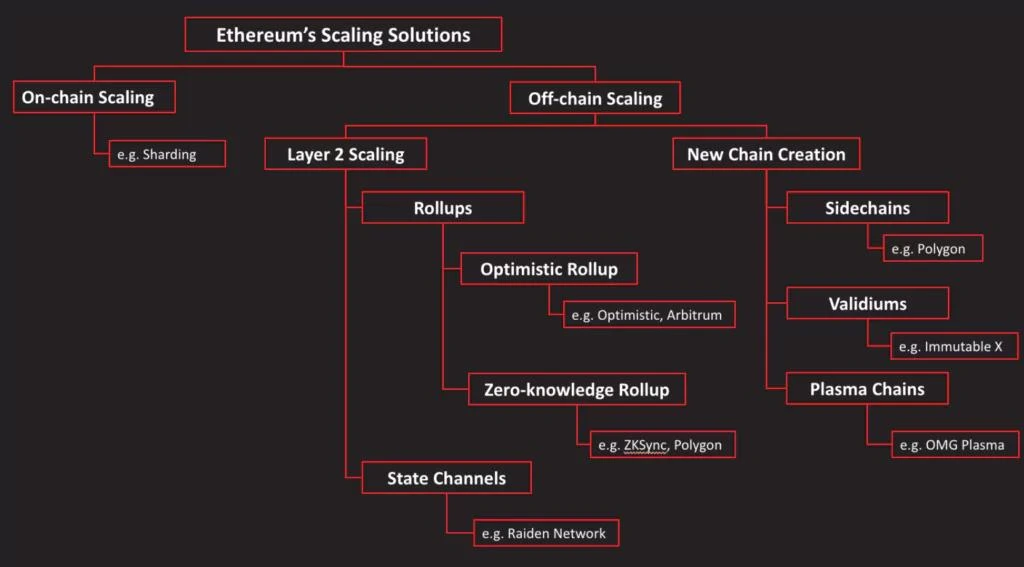
Ethereum changes more actively. Its roadmap focuses on scaling, security, user experience and Layer 2 efficiency. Blob transactions and rollup improvements show the direction: reduce costs for high-volume usage while keeping Ethereum mainnet as the settlement base.
This difference is not a weakness on either side. It reflects different priorities. Bitcoin protects a simple monetary promise. Ethereum tries to support a growing application economy. One optimizes for minimal change. The other accepts more change to expand what the network can do.
What the Comparison Really Shows
Ethereum vs Bitcoin becomes clearer when the question shifts from price to purpose. Bitcoin is the cleaner monetary asset: fixed supply, proof of work, conservative design and a strong scarcity narrative. Ethereum is the more flexible network asset: proof of stake, smart contracts, dynamic supply and a growing Layer 2 ecosystem.
Neither fully replaces the other. Bitcoin is stronger when the priority is simplicity, scarcity and monetary resilience. Ethereum is stronger when the priority is programmable finance, applications and on-chain execution. The most practical decision is to define the job first, then choose the asset that fits that job.
For a long-term holder who wants the least complex crypto thesis, Bitcoin is usually easier to understand. For a user or investor who wants exposure to how blockchain applications are built and used, Ethereum offers a wider but more complicated opportunity. That is the real difference – not just two coins, but two different models for what a decentralized network should become.